COcyber Batch #3 Ambassadors in the Spotlight: Monika Kutejova

With its third batch now underway, the COcyber Ambassador Programme continues to expand the network of professionals supporting stronger civilian-defence cybersecurity cooperation in Europe. Since its launch, each of the three cohorts has brought new expertise, perspectives and connections, helping to broaden the project’s outreach and reinforce dialogue within the cybersecurity community.
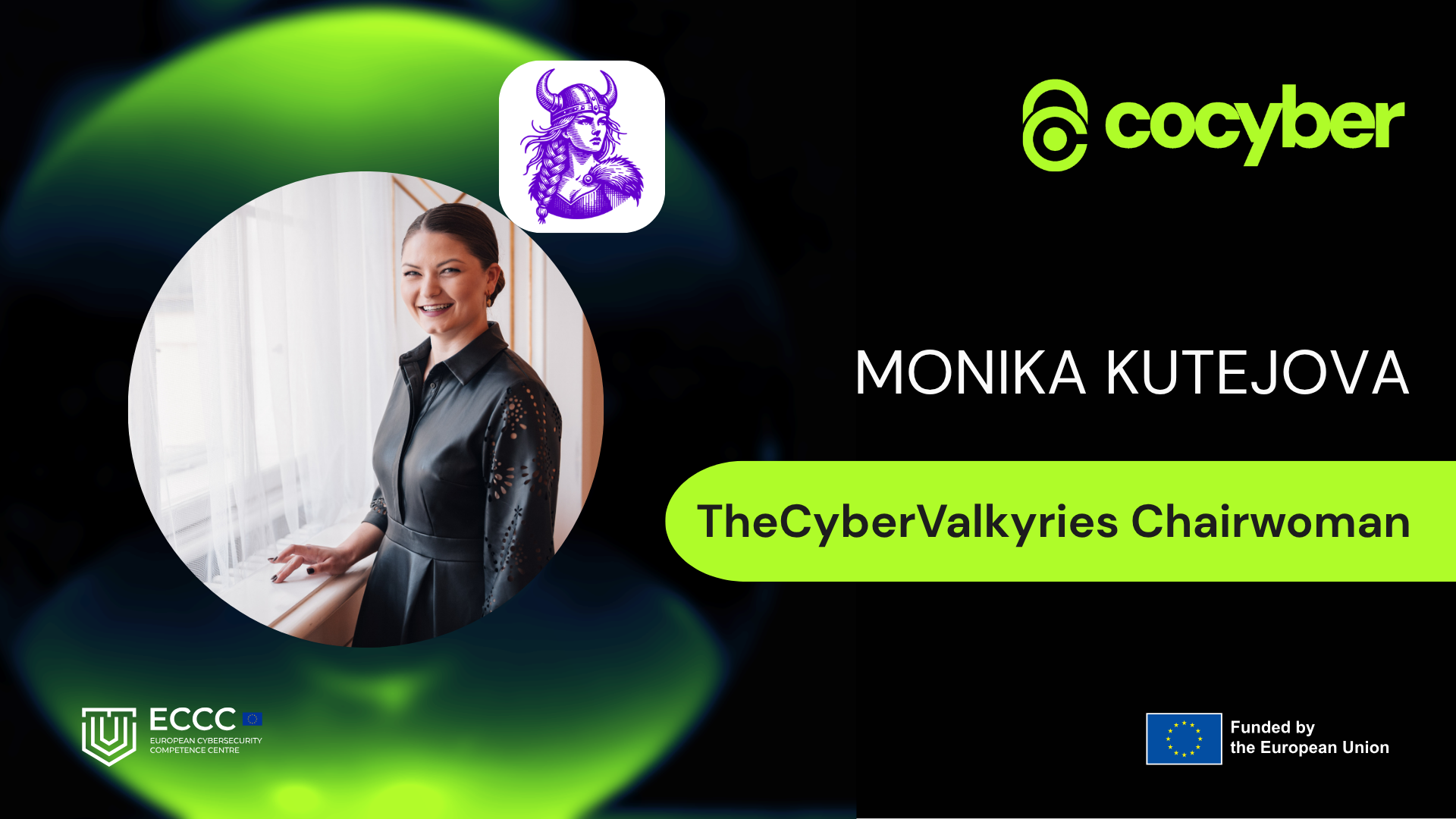
As Batch 3 approaches the final stage of its six-month ambassadorship, we are introducing the professionals who have helped carry this work forward. In this article, we spoke with Monika Kutejova,Chairwoman of The Cyber Valkyries NGO, about her background, her perspective on European cybersecurity, and her reflections on the COcyber Ambassador experience as the journey comes to an end.
Q: Who are you, and what is your professional background?
I am a cybersecurity enthusiast, threat intelligence analyst, and foundress focused on strengthening resilience across both public and private sectors. With a background in cyber threat intelligence (CTI), analysis, and strategic security advisory, I specialise in translating complex threat landscapes into insights for decision-makers.
I have worked in high-responsibility environments, including the Czech public sector, where I focused on cyber threat analysis, investigations, supply chain security, and internal security processes. I am also actively involved in mentoring junior professionals and contributing to cybersecurity education initiatives.
Beyond my analytical work, I am the foundress and organiser of the annual ŽENY V KYBER (Women in Cyber) conference, which supports greater diversity and inclusion in cybersecurity. The conference brings together professionals from various disciplines to share real-world experiences and inspire the next generation of cybersecurity talent.
Q: Since when and how are you involved in the European cybersecurity sector?
I have been actively involved in the European cybersecurity sector since the early stages of my professional career in cyber threat intelligence, when I began working on nationally significant cybersecurity agendas within the Czech public sector. From the beginning, my work operated within the broader European regulatory and threat landscape, shaped by frameworks such as NIS/NIS2, and the evolving EU cybersecurity strategy.
My involvement deepened through my analytical work on cyber threats affecting European institutions, critical infrastructure, and private-sector entities. In addition to operational analysis, I have contributed to strengthening European cybersecurity capacity through education and public engagement, regularly speaking at conferences and professional events and translating complex cybersecurity topics into practical insights for European audiences.
As mentioned, I am also the foundress and organiser of the annual ŽENY V KYBER (Women in Cyber) conference. Although based in the Czech Republic, the initiative reflects broader European values of cooperation, equal opportunity, and cross-sector collaboration in building cyber resilience.
Q: From your perspective, what are the main challenges in the collaboration of the civilian and defence cybersecurity sectors in Europe?
From my perspective, one of the main challenges is the difference in culture, priorities, and operational tempo. Civilian organisations, both public and private companies, often focus on risk management and business continuity, while defence environments prioritise national security, intelligence protection, and strategic deterrence. These differing objectives can make it difficult to align expectations.
Another major challenge is information sharing. Although both sectors face many of the same threat actors and tactics, legal restrictions and classification levels limit the exchange of actionable intelligence. Defence entities may hold valuable insights that cannot easily be shared outside classified channels, while civilian organisations may lack the structures or trust frameworks needed to integrate defence-driven intelligence into daily operations.
Another barrier is the regulatory and organisational fragmentation in Europe. Member States operate under different legal frameworks, which can slow down joint initiatives. Workforce dynamics also play a role: the civilian sector often moves faster in adopting new technologies and attracting talent through flexible career paths, whereas defence structures can be more rigid.
Q: Again, from your perspective, what are the most crucial steps to address these challenges and strengthen Europe's joint digital safety efforts?
From my perspective, one of the most crucial steps is building practical trust frameworks for information sharing. This means creating structured mechanisms that allow relevant insights to be translated into civilian-usable intelligence without exposing sensitive sources or methods.
Another key step is investing in joint education and cross-sector training. Civilian professionals and defence specialists often operate in parallel ecosystems with limited exposure to each other's realities. Shared exercises and mentoring programmes could help bridge the gaps between these realities.
I believe Europe should continue supporting community-driven initiatives that foster dialogue across sectors, like conferences and professional networks. These play an important role in shaping a shared cybersecurity culture and translating high-level strategies into real cooperation.
Q: Did your experience as a COcyber Ambassador align with what you expected at the beginning, and what are your key reflections now that the journey is ending?
Yes. For me, the value of the CoCyber program was mainly in supporting an initiative that aims to make cybersecurity more accessible and inclusive. I think programs like this are important because they help increase visibility of different people and career paths within the field, and can encourage others to consider cybersecurity as a space where they belong as well.
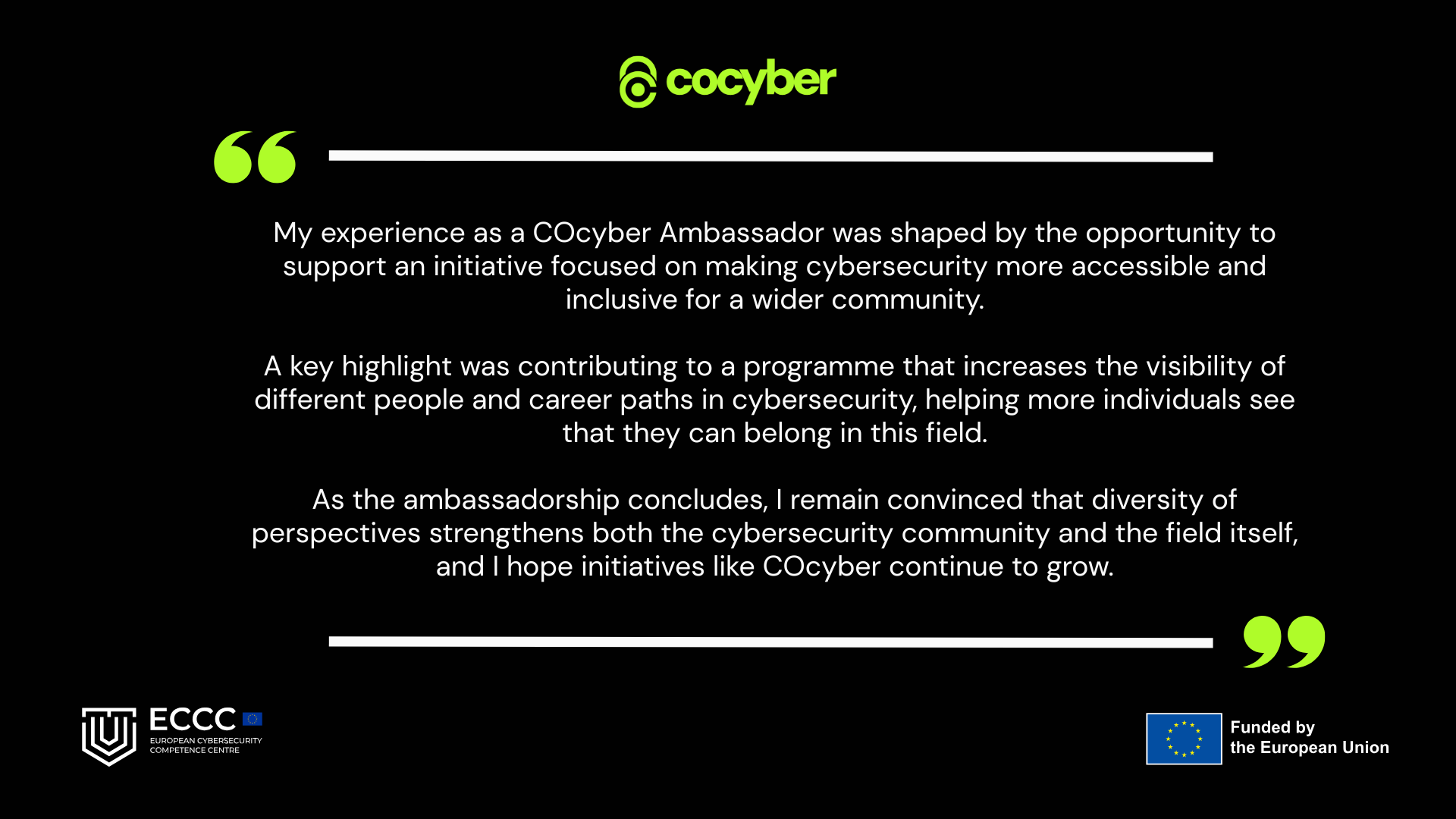
Even though the involvement was not heavily interactive, I still appreciate the idea behind the program and the effort to build a more open and supportive cybersecurity community. I believe it is important for initiatives like CoCyber to continue, as diversity of perspectives is valuable for both the community and the field itself.