From Strategy to Implementation: National Cybersecurity Action Plan in Hungary

Hungary has long demonstrated strong strategic ambition in cybersecurity, but earlier policy cycles repeatedly fell short on execution. The adoption of a new Cybersecurity Strategy in March 2025 and its accompanying National Cybersecurity Action Plan for 2025–2030 represent a break from that pattern, and Gábor Varga from our partner IVSZ – Hungarian Association of Digital Companies, author of this COcyber white paper, examines what makes this shift significant and where its greatest opportunity lies.
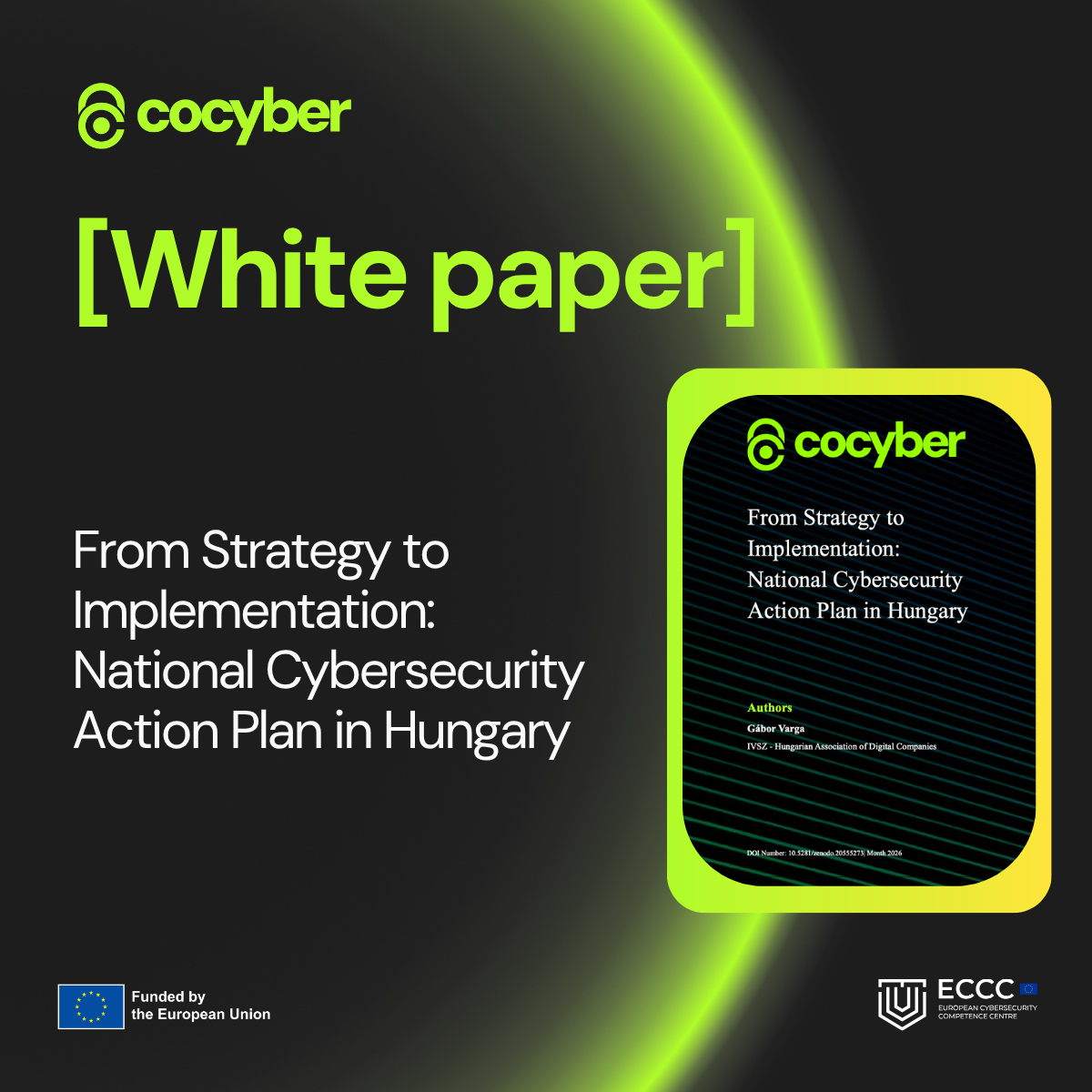
The paper focuses on Task 24 of the Action Plan: the establishment of a professional forum to evaluate emerging cybersecurity technologies. The initiative addresses a coordination failure in Hungary's technology adoption environment: the author describes it as a "mutual waiting" dynamic, where organisations hesitate to deploy innovative technologies without regulatory clarity, while regulators hesitate to issue guidance without established use cases.
The Task 24 Forum, co-coordinated by IVSZ and applied to the research institute HUN-REN SZTAKI, is designed to break this deadlock through a joint evaluation.
The Forum concerns itself with four technology domains: trusted computing environments, privacy-enhancing technologies, synthetic media provenance, and quantum-resistant cryptography, to address vulnerabilities in infrastructure, data, and the cognitive domain. These capabilities are inherently dual-use, making the forum a mechanism for civilian-defence cooperation in cybersecurity and a success model that the COcyber project makes available to the wider European community.