COcyber concludes two years of cybersecurity collaboration with final General Assembly and Conference in Brussels
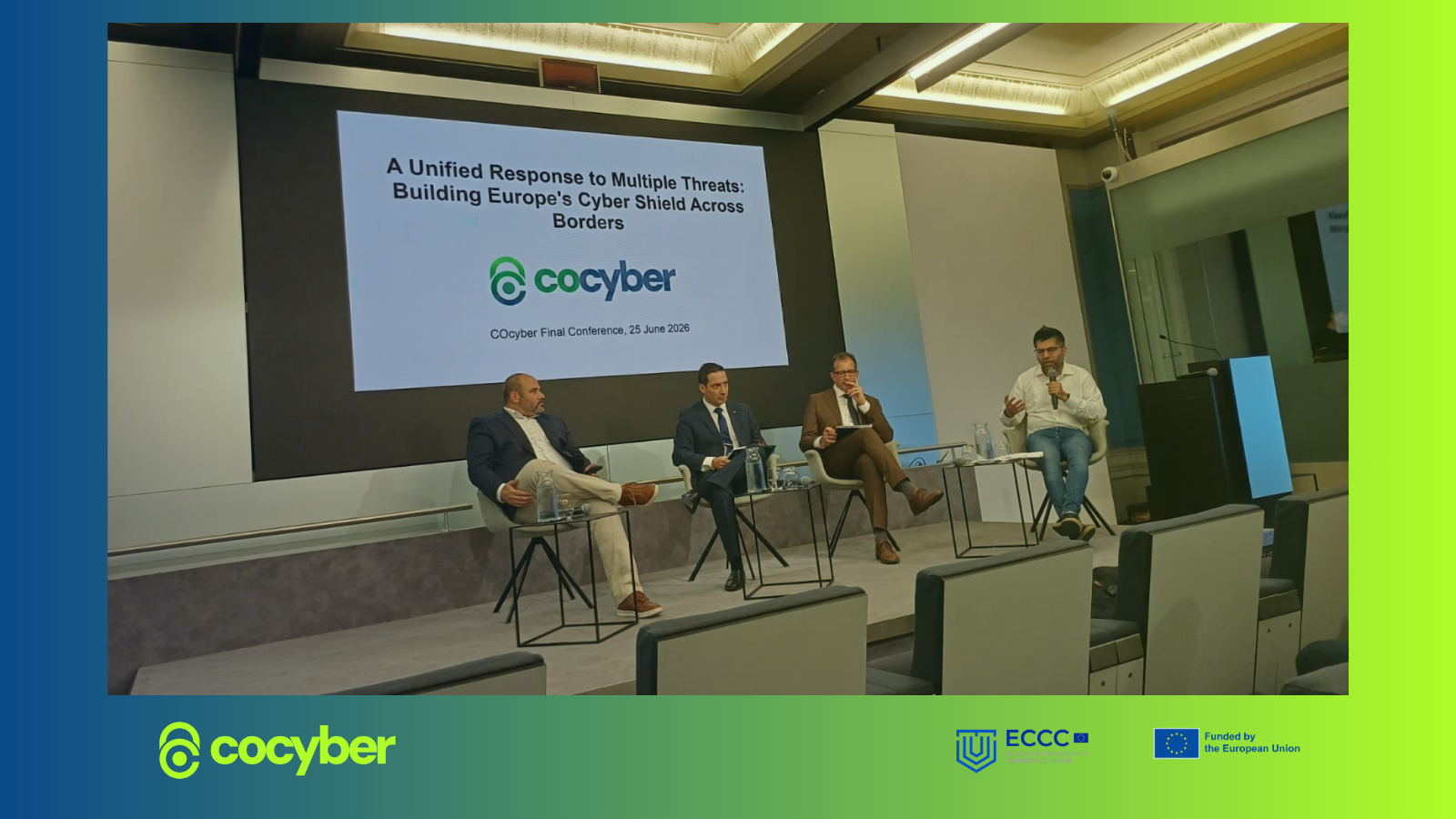
After two years of collaboration, knowledge exchange and community building, the COcyber project concluded its activities with two milestone events in Brussels: the final General Assembly on 24 June and the COcyber Final Conference on 25 June.
The two events marked the culmination of COcyber’s work to strengthen cooperation between civilian and defence cybersecurity communities, while giving project partners and the wider European cybersecurity community the opportunity to reflect on achievements, discuss final results and look at the future of European cybersecurity cooperation.
The final General Assembly (June 24th) gathered the COcyber consortium for the last time to review achievements, finalise key outputs and align on the project’s legacy.
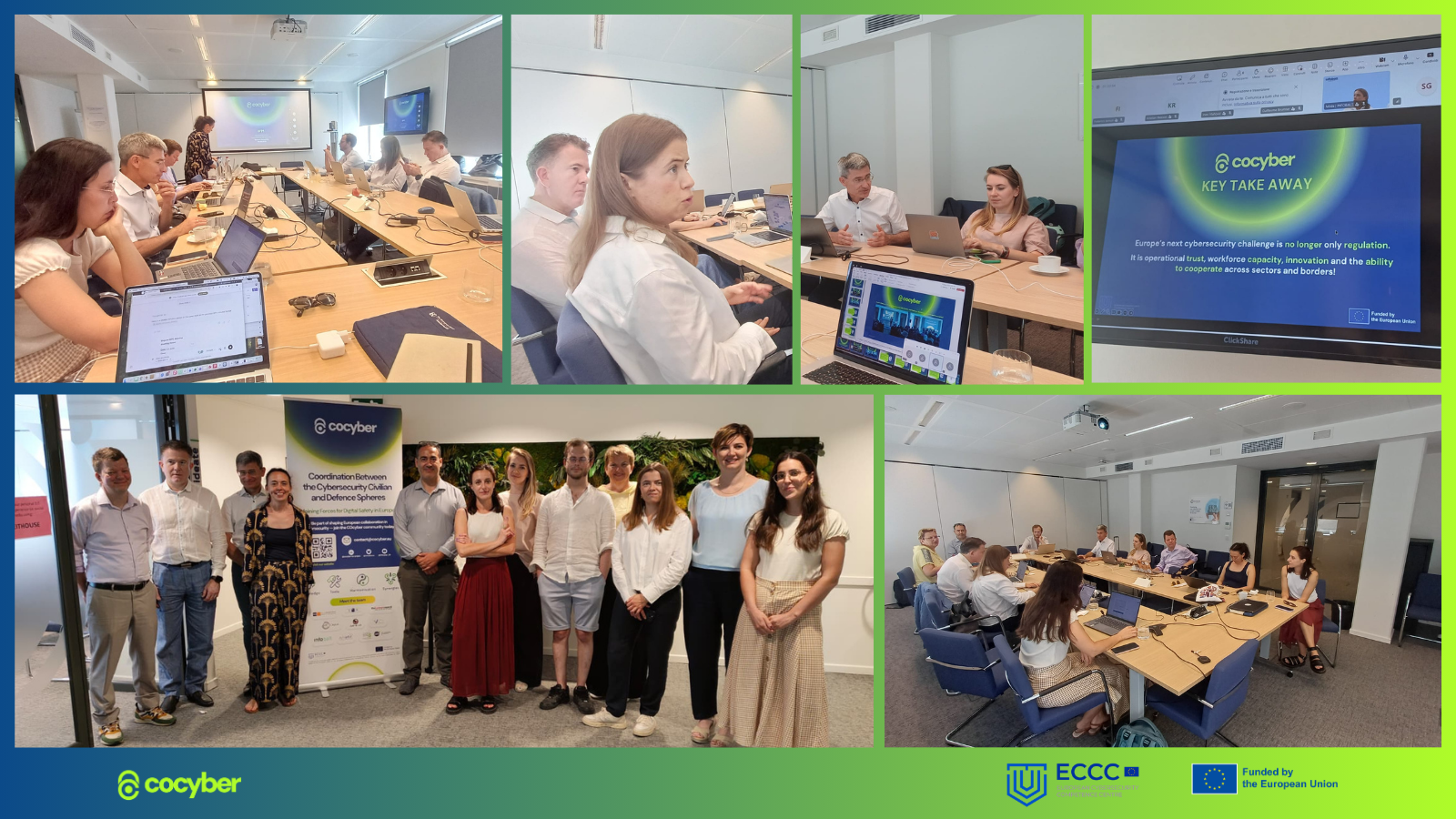
Throughout the day, partners discussed knowledge transfer and good practices, the final features of the COcyber Platform, two years of collaboration, project results and impact, final reporting, dissemination, stakeholder engagement, synergies, exploitation and sustainability.
The meeting helped connect the project’s outputs with its longer-term value, ensuring that the tools, insights and partnerships developed through COcyber can continue supporting Europe’s cybersecurity ecosystem beyond the project’s lifetime.
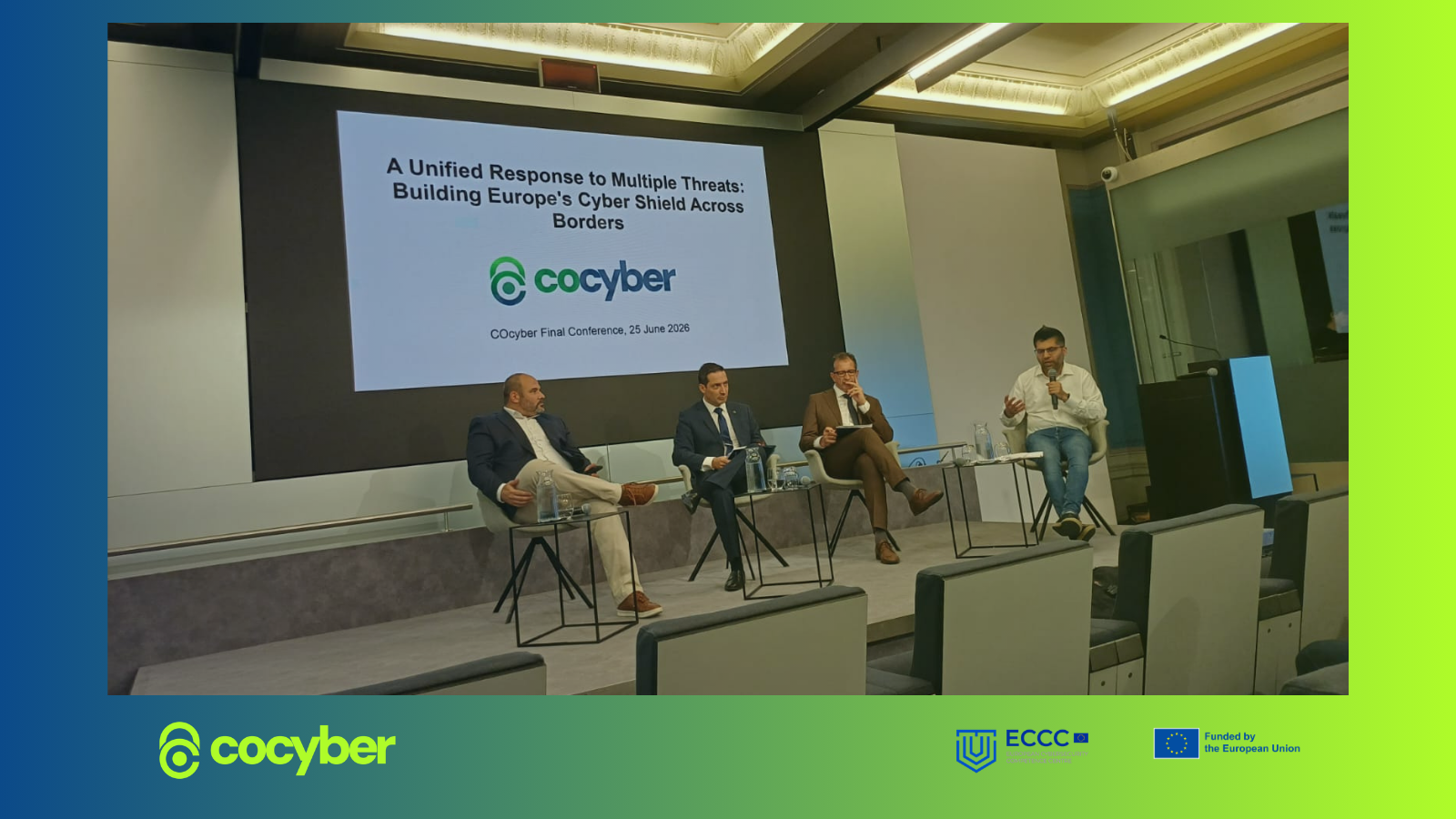
The following day, June 25th, the COcyber Final Conference took place in Brussels, welcoming European institutions, policymakers, researchers, industry representatives and cybersecurity practitioners for interactive discussions on Europe’s response to an increasingly complex cyber threat landscape.
The conference opened with welcome remarks from Alina Taralunga, representing the European Cybersecurity Competence Centre (ECCC), setting the scene for conversations on cooperation, resilience and the need for a more unified European approach.
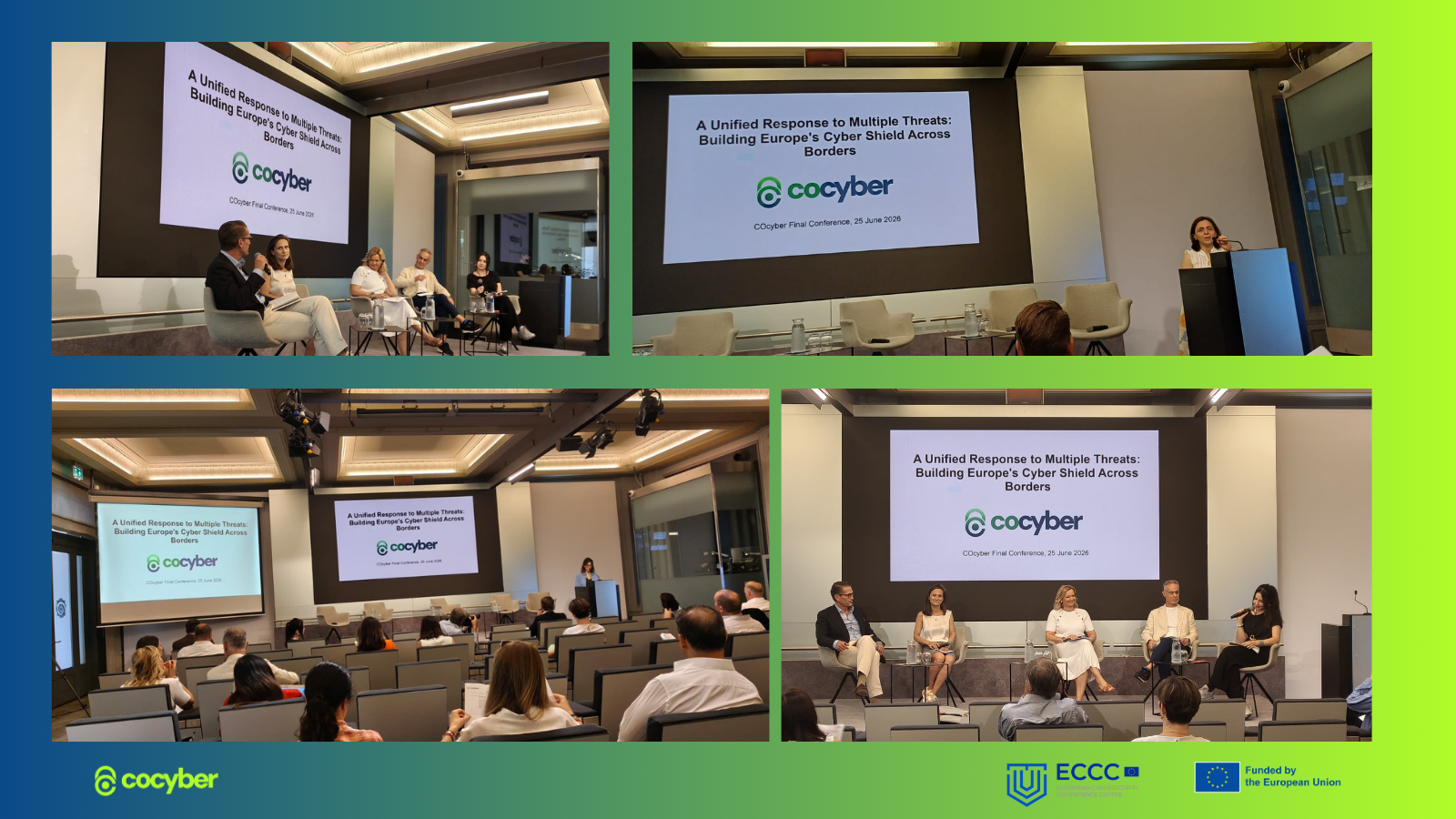
The first panel, “Outpacing the Threat: Why Europe Needs a Unified Cyber Shield and How to Build It,”featured Lars Koreman from the European External Action Service, Iva Tasheva from DKV Belgium, Stella Tsitsoula from the Hellenic Cybersecurity Centre and Christos Xenakis from the University of Piraeus. Moderated by Isabella Neumann from the University of Groningen, the discussion examined the current state of cross-border cybersecurity cooperation in Europe, highlighting what is already working, where gaps remain and what concrete steps are needed to build a more coordinated European cyber shield.
In the first parallel session, “Need for Speed: From Policy to Practice in Strengthening Europe’s Cyber Posture,”representatives from CHIEF, CYBERHUBS, ECHO and SPECTRO, moderated by Alessandra Zini from 28DIGITAL and COcyber Coordinator, explored how European cybersecurity initiatives are translating policy ambition into practical action. The session showcased complementary approaches, collaboration models and project results contributing to a more resilient European digital ecosystem.
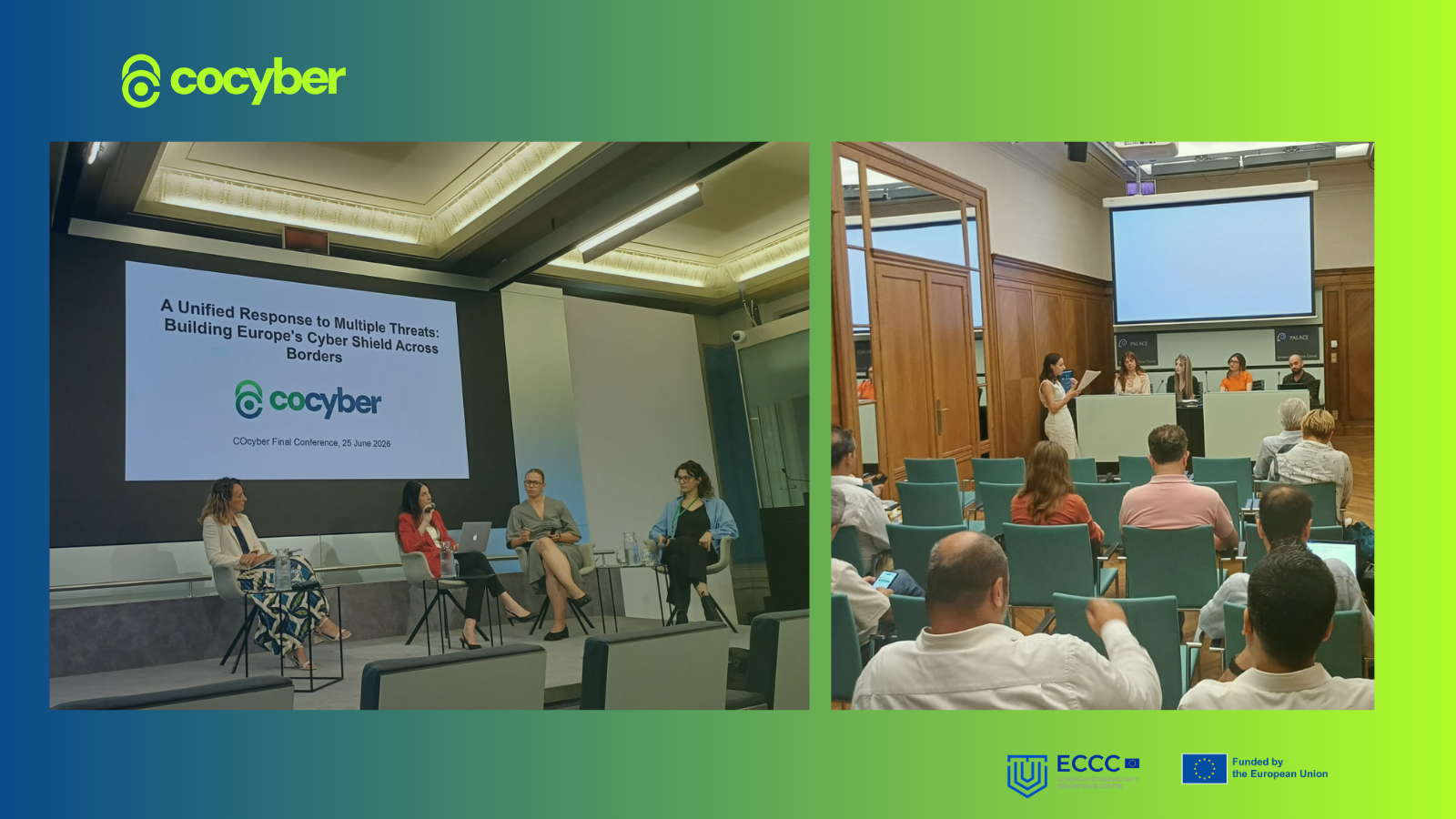
Running in parallel, “Safeguarding Democracy in the Digital Age: A Unified European Response to Cyber Threats” featured Eleonora Mongelli from the Italian Federation for Human Rights, Elina Eickstädt from Chaos Computer Club and Marina Mancuso from Transcrime. Moderated by Maria Chiara Zaccaria from The Lisbon Council, the session focused on disinformation, electoral interference, ransomware, attacks on public institutions and other threats affecting democratic life.
The final session, “Dual Use, Single Vision: Rethinking Cyber Innovation,” explored the growing connection between civilian and defence cybersecurity. Carlos de Passos from the European Defence Agency, Engin Buker from Thales and Giuseppe Zuffanti from the European Security and Defence College, moderated by Fahad Sohrab from the University of Eastern Finland and Tampere University, discussed how dual-use technologies and cross-sector collaboration can strengthen resilience, competitiveness and security across Europe.
Building on the COcyber Legacy
While the Brussels events marked the formal conclusion of the COcyber project, they also reinforced one of its central messages: Europe’s cybersecurity challenges cannot be addressed in isolation.
Over the past two years, COcyber has contributed to this effort by building evidence, fostering dialogue, developing practical tools and strengthening connections between civilian and defence cybersecurity actors.
The final General Assembly and Final Conference celebrated these achievements while setting the foundations for continued cooperation beyond the project’s lifetime.
The COcyber consortium thanks all partners, speakers, moderators, participants and stakeholders who contributed to the project and helped shape a stronger, more connected European cybersecurity ecosystem.