COcyber at the 4th National Cyber Security and Resilience Forum
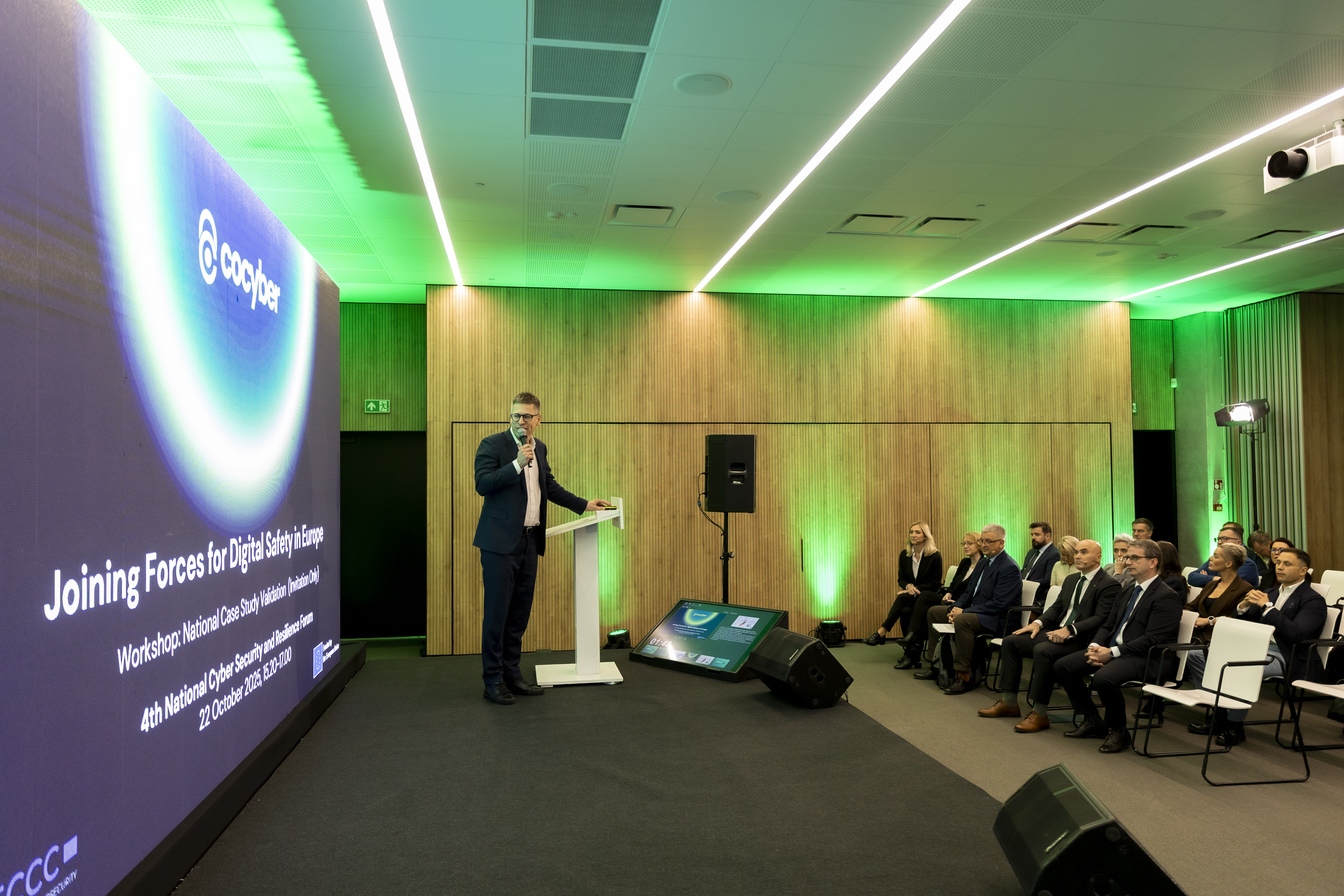
The 4th National Cyber Security and Resilience Forum brought together leading experts, policymakers, industry representatives, and the research community to discuss Lithuania’s and Europe’s digital future. Held at the Lvivo Business Centre in Vilnius and streamed online, the Forum focused on strengthening cyber resilience through collaboration, innovation, and shared expertise.
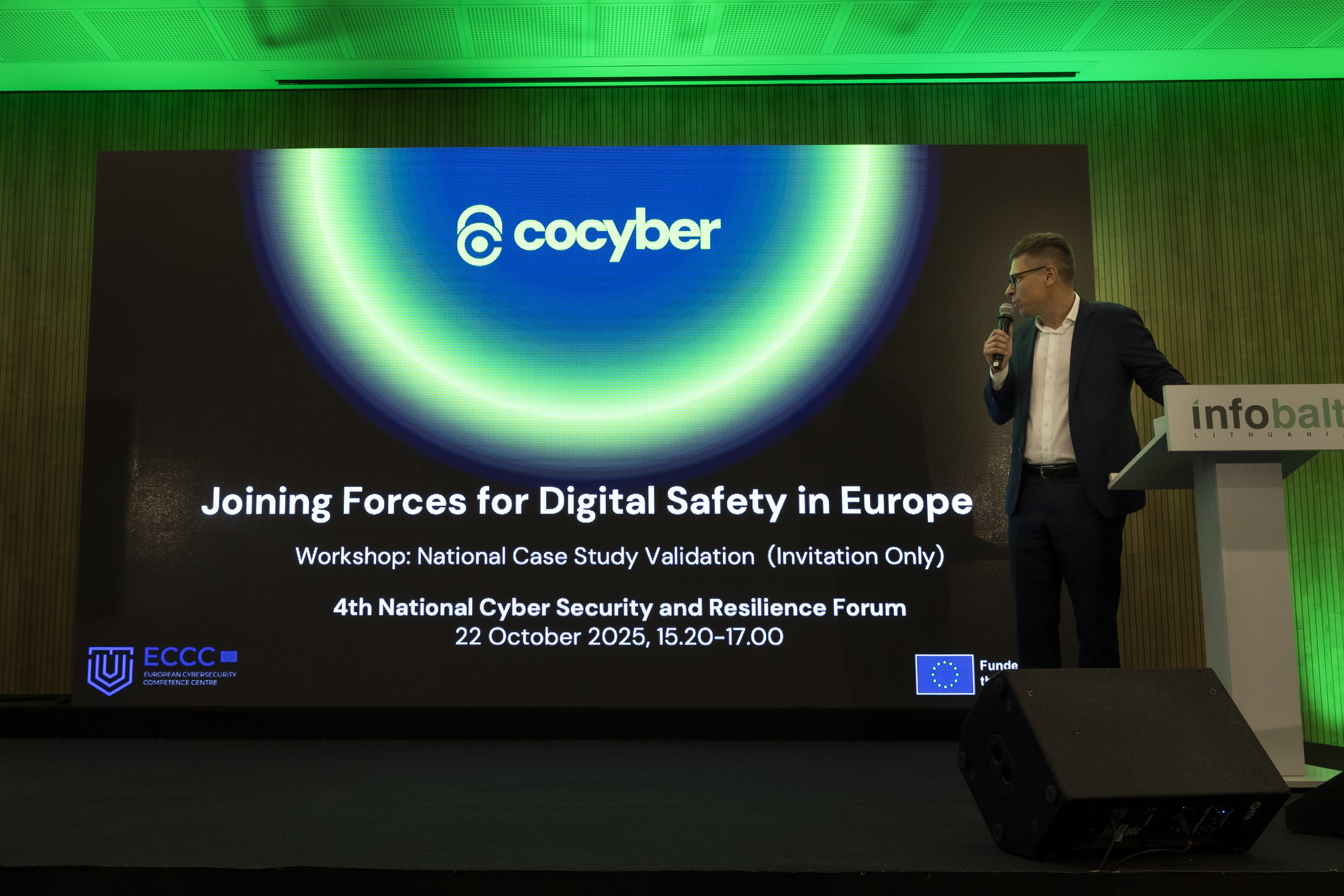
The event convened representatives from national institutions, the private sector, academia, and international organisations to reflect on the latest developments, challenges, and strategic needs in cybersecurity and digital resilience. It served as a platform for exchanging knowledge between cybersecurity policymakers, industry experts, and technology leaders, aiming to enhance Lithuania’s and Europe’s capacity to respond to evolving cyber threats.
The programme featured keynote speeches by national security and diplomacy leaders, as well as strategic insights from ENISA, DIGITALEUROPE, the Ministry of National Defence, the National Cyber Security Centre, the Ministry of Foreign Affairs, the Ministry of Economy and Innovation, Kaunas University of Technology, and others. Leading technology companies—including Microsoft, CyberArk, Amazon Web Services (AWS), Telia, Crayon, and TEGOS Legal—shared their perspectives on current cybersecurity challenges, innovation trends, and practical solutions.
Reflecting on the event, Milda Savickaitė, Head of Innovation Policy at INFOBALT, noted:
“The Forum once again demonstrated the importance of cooperation between government, industry, and academia in strengthening our national and European cyber resilience. By sharing experiences and aligning our efforts, we can build a safer digital environment for all."
COcyber National Validation Workshop: Lithuanian Case Study on Cybersecurity Technology and Information Transfer
As part of the forum's programme, our partner INFOBALT hosted a closed Validation Workshop session, bringing together experts from the National Cyber Security Centre, IT and cybersecurity companies, critical infrastructure sectors, legal professionals, and representatives from telecommunications and energy. Their combined insights were essential in assessing how technology transfer and information-sharing mechanisms function within Lithuania’s cybersecurity ecosystem.
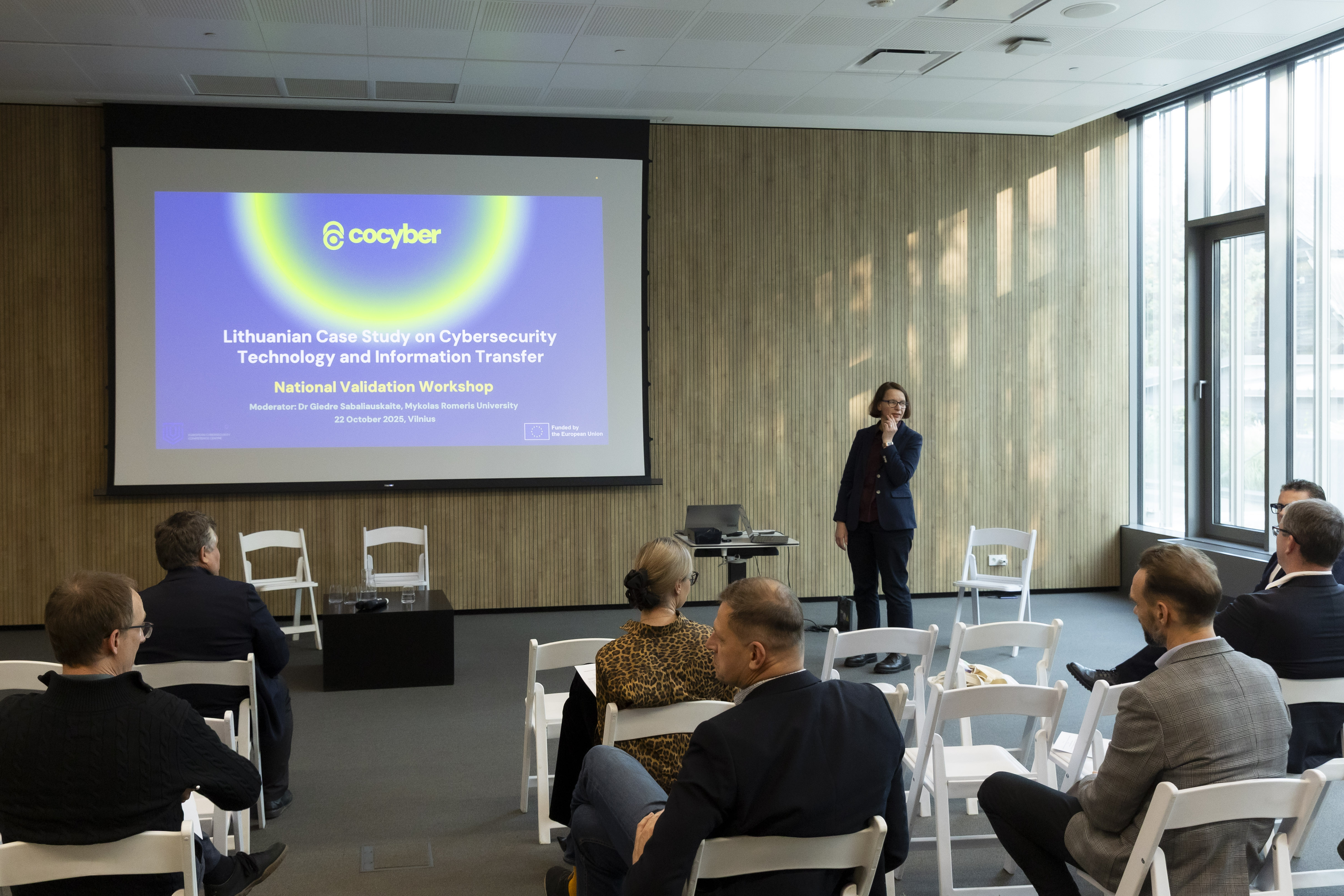
Moderated by Dr. Giedrė Sabaliauskaitė of Mykolas Romeris University, the workshop guided participants through the preliminary results of the national case study, inviting reflection, critique, and validation from stakeholders directly engaged in Lithuania’s cyber domain.
Workshop Agenda
As presented during the session, the workshop followed a structured agenda covering five key areas:
- Cybersecurity landscape in Lithuania
- Cybersecurity technology transfer in Lithuania
- Cybersecurity information sharing in Lithuania
- Dual-use cybersecurity technologies in Lithuania
- Recommendations
Each topic involved focused discussion, enabling participants to evaluate the maturity, barriers, and opportunities within each domain.
The workshop created a constructive environment for identifying strengths and organisational gaps related to cooperation and knowledge exchange. These findings feed directly into COcyber’s broader analysis of national cybersecurity ecosystems across the EU, supporting evidence-based recommendations for improving resilience and technological innovation.
Reflecting on the session, Virgilijus Dirma, Deputy Director at INFOBALT, noted:
“This workshop was a valuable opportunity to bring together key voices from Lithuania’s cybersecurity ecosystem – bridging civil and defence cybersecurity communities, academia, and industry. It clearly demonstrated how cooperation between civil and defence actors, especially around dual-use technologies, can strengthen both national and regional cyber resilience. The discussions helped validate COcyber’s mission – building trust, knowledge exchange, and innovation capacity across Europe’s cybersecurity community.”
The workshop’s in-depth discussions and expert contributions strengthened the understanding of Lithuania’s cybersecurity capabilities and cooperation practices, offering valuable input to COcyber’s ongoing work.